
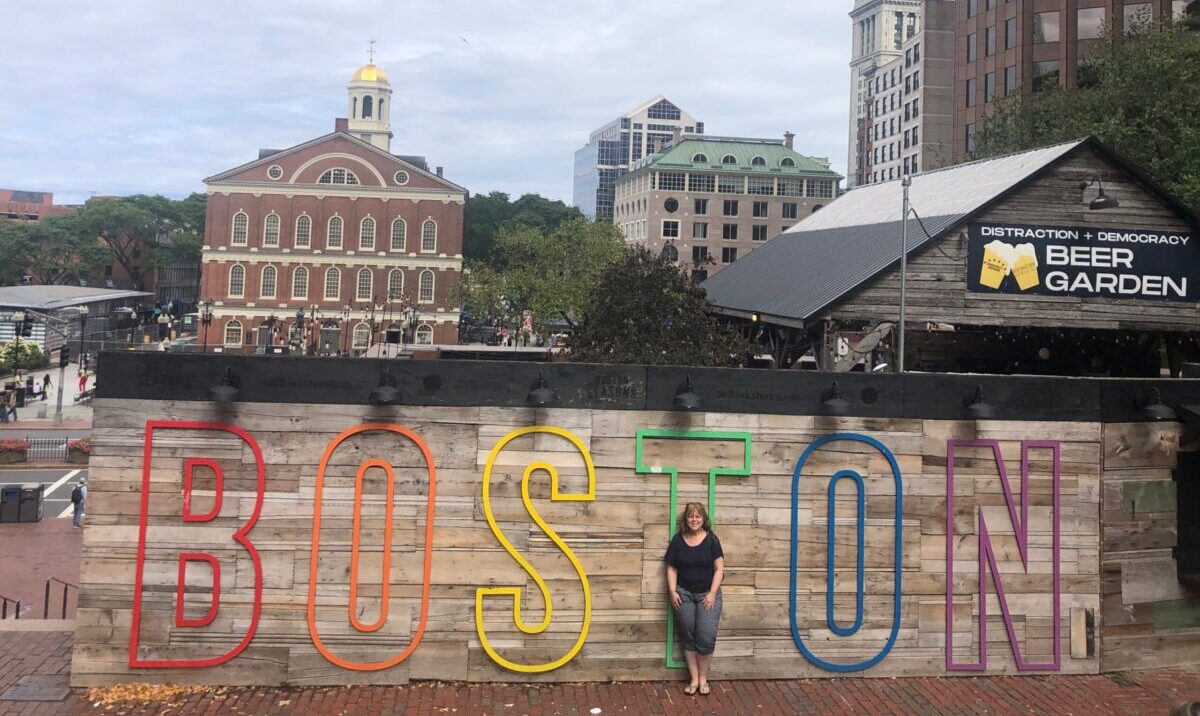
I’ve always believed that a great trip doesn’t have to mean cramming in a million sights or blowing your budget — and Boston proved that beautifully. We recently spent four days exploring this walkable, vibrant, and history-drenched city, and it was everything we love in a destination: world-class museums, stunning architecture, great food, and enough history to keep your curiosity working overtime.
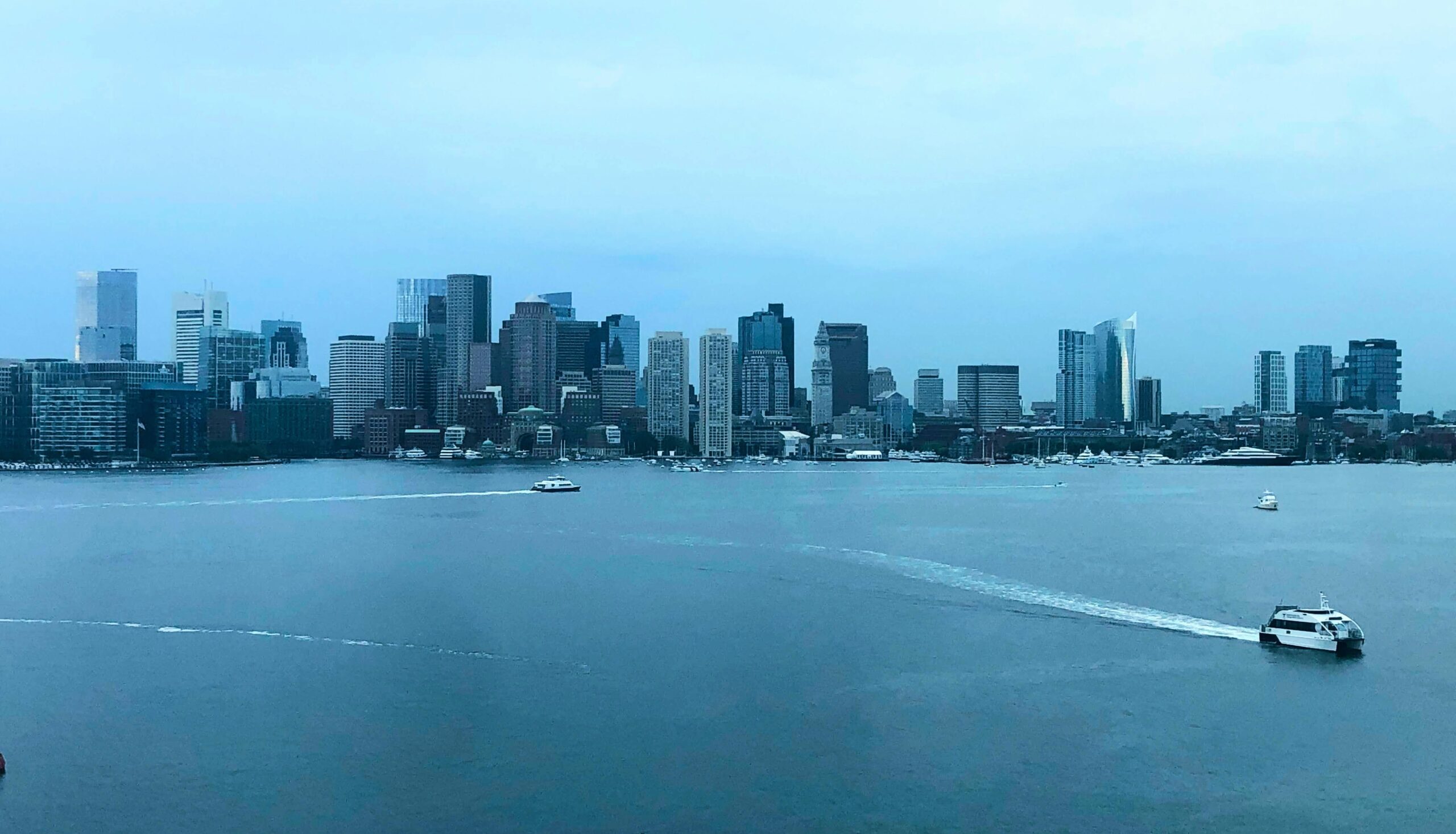
Boston is compact but never boring, and thanks to its efficient and affordable public transportation (known as “the T”), it’s one of the easiest cities to explore without a car. We relied on the T for longer hops but mostly walked — the best way to uncover the city’s hidden corners, especially when you’re chasing beautiful buildings, unique neighborhoods, or the perfect bakery.
If you’re a fan of art, architecture, and history and also enjoy a well-made cappuccino, a side of old-world charm, and the occasional duck statue, read on. Boston just might be your next favorite escape.
Getting to Boston (and Beyond)
One of the many things that makes Boston a great getaway is how easy it is to get to — whether you’re flying, driving, or coming by train.
Logan International Airport (BOS) is the city’s main airport and just a short ride from downtown. It’s surprisingly close — you can take a water taxi, shuttle, or quick T ride into the city. If you’re staying at a hotel near the airport (like we did), many offer free shuttles, which is a nice bonus.
If you’re arriving by train, Amtrak serves Boston via South Station and Back Bay Station, with routes from New York, Philadelphia, Washington D.C., and beyond. It’s a scenic and stress-free option if you’re coming from the Northeast corridor. For regional travel, the MBTA Commuter Rail also connects Boston with nearby towns and suburbs.
Driving is doable but not always ideal. Boston’s streets are historic (read: confusing), and parking can be expensive. If you do road trip in, consider parking at your hotel and using public transportation for everything else.
Where We Stayed (and Why We’d Stay There Again)
The best views of the skyline — hands down — are from across the harbor, where we stayed at the Hyatt Regency Boston Harbor. I really wanted to stay at a Hyatt closer to everything, but we were happy we booked this one. Located right on the waterfront near Logan Airport, the hotel gave us a stunning, panoramic view of the Boston skyline, especially at sunrise and sunset. Watching the city light up from across the harbor was one of the most unexpectedly beautiful parts of the trip.
Even better? The hotel offers a free airport shuttle, which made getting to and from the airport effortless (and saved us a solid chunk of change). You also have the option of catching a water taxi or taking the shuttle to the nearest T station at the airport. We never felt far from the action, even though we were tucked away in a peaceful waterfront spot.
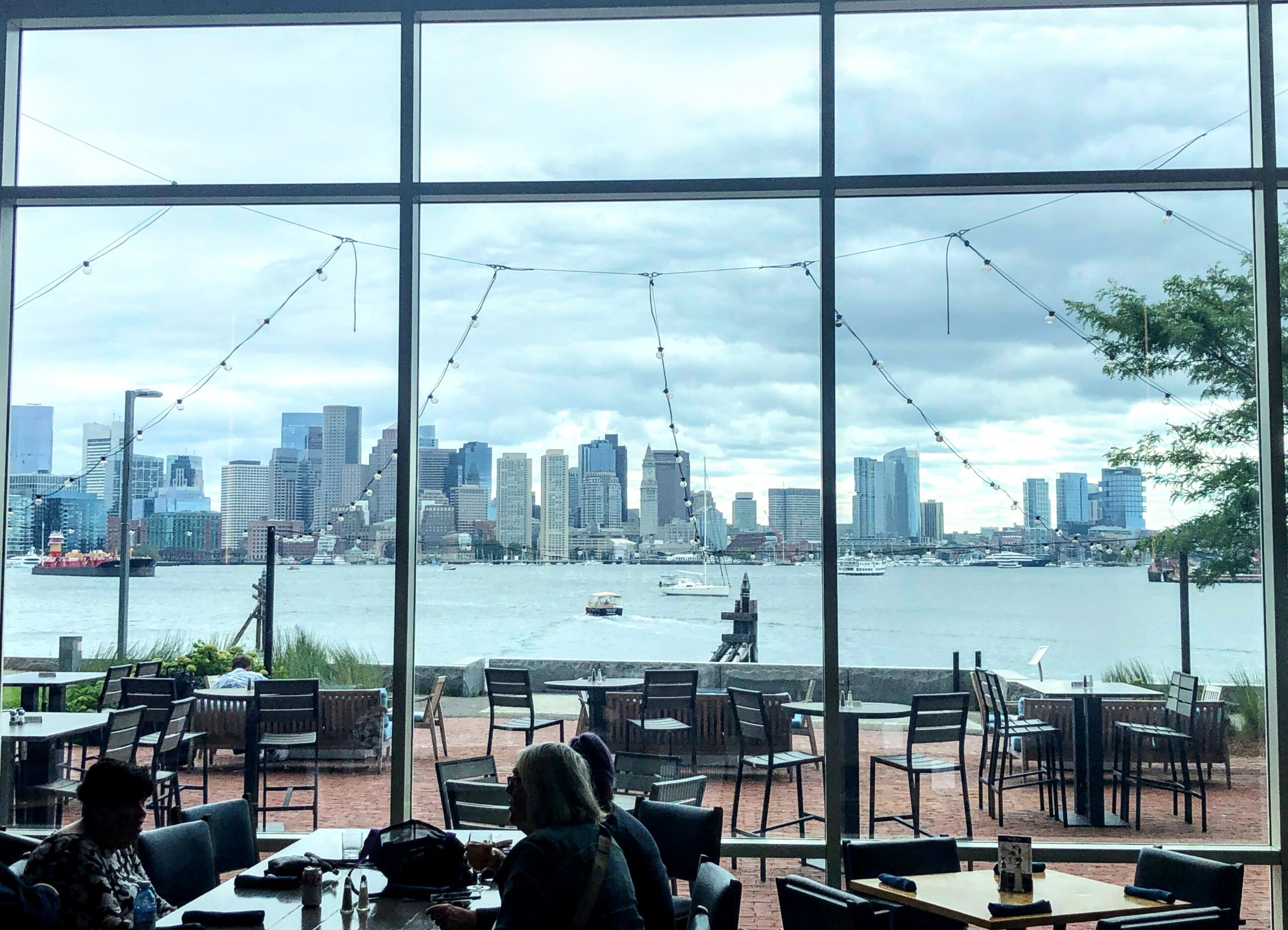
The hotel has a restaurant with floor-to-ceiling windows, perfect for enjoying the Boston skyline while sipping your morning coffee or winding down with dinner. There’s also an outdoor patio with gas firepits, which quickly became our favorite place to relax after a long day of exploring. Sitting outside with a glass of wine, watching the lights of the city reflect on the water? Pretty much the perfect ending to a perfect day.
Start with the Freedom Trail
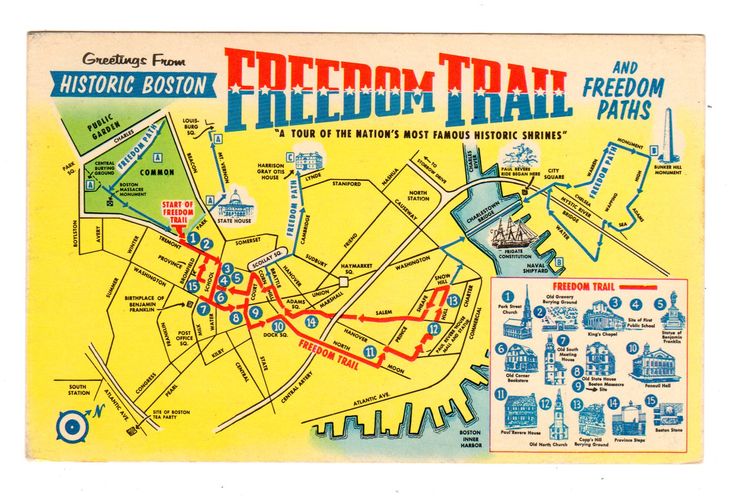
One of the best ways to get your bearings (and exercise) in Boston is by walking the Freedom Trail, a 2.5-mile red brick path that weaves through the city, linking some of the most important sites in American history. It’s a brilliant way to explore Boston on foot, winding through Downtown, the North End (Boston’s own Little Italy), and into Charlestown.
The trail is easy to follow — it’s literally a line of red bricks set into the sidewalk — and along the way, you’ll pass places like Paul Revere’s House, Faneuil Hall, the Old North Church, and Bunker Hill. The combination of architecture, storytelling, and scenery kept us completely engaged, and because many of the stops are free or low-cost, it’s a great option for travelers watching their budget.
While you’re in the North End, don’t skip Mike’s Pastry. We saw tons of people walking around with their iconic white pastry boxes tied with string, and when half the city seems to be carrying dessert from one place, you know it has to be good! The cannoli I got lived up to the hype and the display cases were filled with old-school Italian treats.
✨PRO TIP: Mike’s is cash-only, so come prepared.
Near Faneuil Hall, you’ll find another Boston legend: the Union Oyster House, the oldest continuously operating restaurant in Boston. It’s been serving up seafood since 1826 and still feels wonderfully old-world with all wood-paneled walls, narrow staircases, and fresh oysters.
And if you follow the trail all the way to Charlestown, don’t miss a stop at Waverly Kitchen and Tavern, just a few blocks from Bunker Hill Monument. It’s a cozy, welcoming spot with neighborhood charm and a menu locals swear by. We enjoyed a delicious brunch there before walking the 2nd half of the Freedom Trail beginning at Bunker Hill. It was exactly the kind of relaxed, satisfying meal we were craving.
A City Built for Walking (and Looking Up)
Boston rewards those who slow down and look up. One of the highlights of our trip was the architecture, history, and photography tour through Viator. With our local guide leading the way, we saw familiar landmarks with fresh eyes and learned to appreciate the details: the symmetry of Georgian facades, the clean lines of modern glass towers, the grand flourishes of the city’s Renaissance-inspired buildings. (Viator offers a lot of other tours as well. Check ’em out here.)
We started in Back Bay, a neighborhood known for its Parisian-style boulevards and 19th-century brownstones. It’s also home to one of the most beautiful buildings we visited on the entire trip: the Boston Public Library. I’d walked past it years ago when I worked for a company headquartered nearby, but I had never actually stepped inside and I’m so glad I finally did.
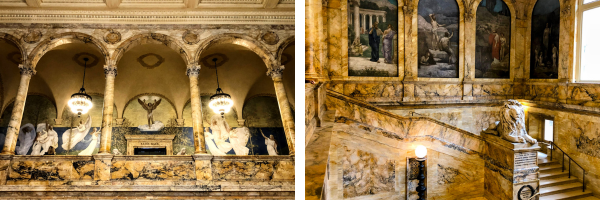
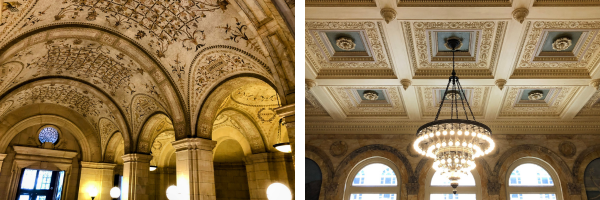
The interior was a complete surprise and a total delight. Marble staircases, vaulted ceilings, serene courtyards, and quiet reading rooms filled with history and grandeur. From the elegant stone lions guarding the marble central staircase to the Renaissance-style murals and the hush of the Bates Reading Room, every corner felt like a little revelation. It’s the kind of space that instantly makes you slow down, look around, and soak it all in.
Just across Copley Square, we admired the heavy arches and warm stone of Trinity Church, then looked up at the sleek Hancock Tower, whose mirrored surface perfectly reflects the historic architecture around it. Nearby, we spotted the Berkeley Building (often still called the Old John Hancock Tower), a classic 1940s skyscraper with a fun secret: its glowing weather beacon at the top. The lights actually forecast the weather with a simple color and blinking pattern system:
Steady blue, clear view.
Flashing blue, clouds are due.
Steady red, rain ahead.
Flashing red, snow instead.
It’s one of those small, charming details you might miss if you weren’t paying attention and exactly the kind of local character that makes Boston so special.
We continued through the Boston Public Garden, where we caught our first glimpse of the Swan Boats gliding quietly across the lagoon. They’re charming in the best way: a bit old-fashioned, a bit magical, and they looked like fun to ride. On the other side of the park, we stopped by the Make Way for Ducklings sculpture, snapped a few photos, and continued our walk.
History Meets Charm in Beacon Hill
If Back Bay is grand and graceful, Beacon Hill is pure storybook. We wandered through narrow brick-paved streets lined with gas lanterns, each corner more picturesque than the last. This is the kind of neighborhood where every window box is perfectly arranged, and every door could star in a movie.
Our walking tour ended at Acorn Street, which might just be the most photographed street in the city…and for good reason. It’s tiny, cobblestoned, and impossibly pretty, nestled between stately homes that have seen generations of change. Even if you don’t care about Instagram, it’s worth the visit.
Just a short walk from Acorn Street, you’ll come across one of Boston’s coolest examples of historic preservation: the Suffolk County Jail. Built in 1851, the prison was considered surprisingly progressive for its time, with a design that emphasized fresh air, natural light, and improved living conditions for inmates. Today, the beautifully restored building is home to The Liberty Hotel.
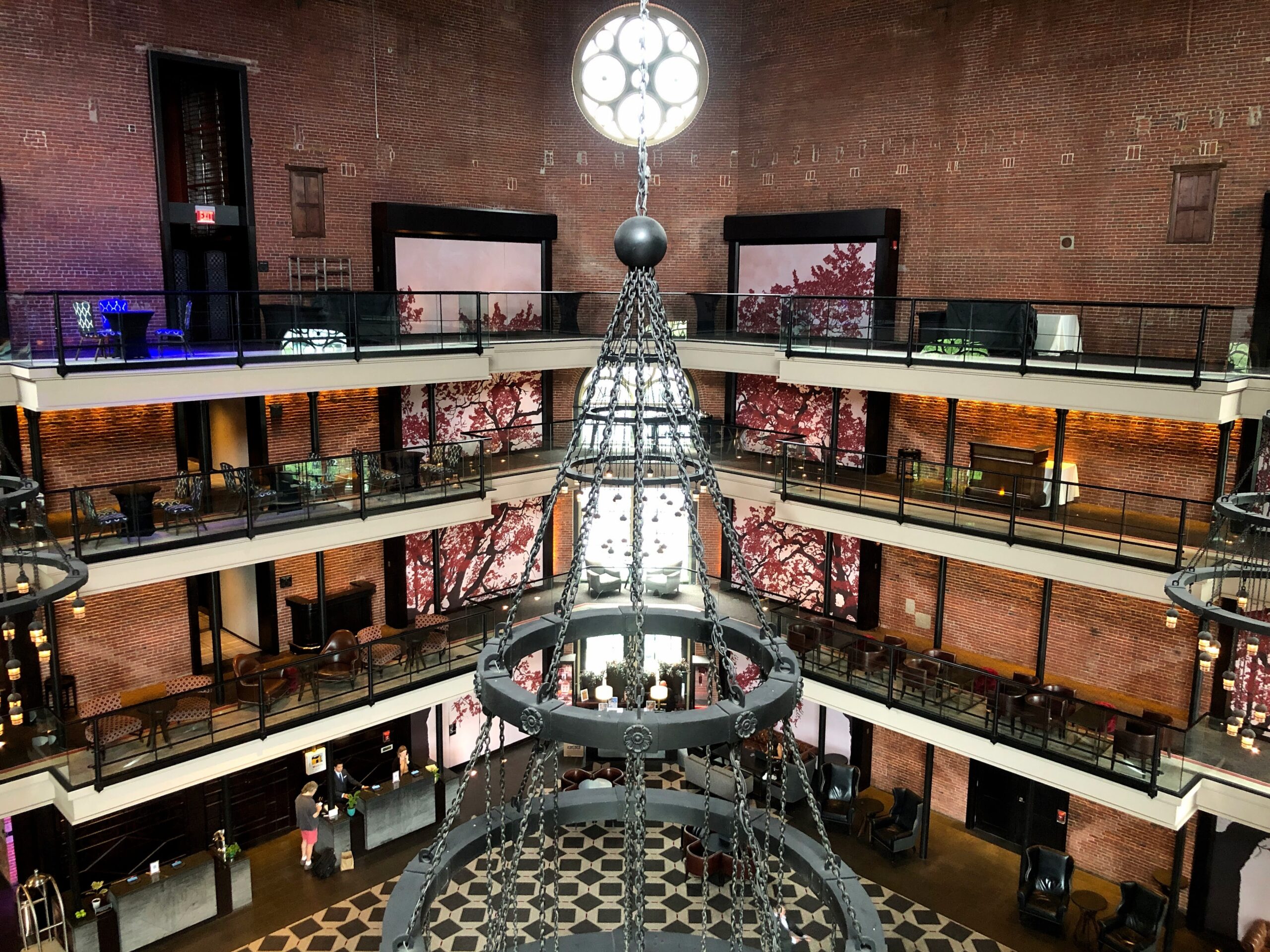
Even if you aren’t staying there, it’s worth stepping inside. Even if you aren’t staying there, it’s worth stepping inside. The hotel’s jailhouse past is woven throughout the property, with original jail cells, catwalks, and ironwork incorporated into the design. They even leaned into the building’s history by giving the hotel bars and restaurants jail-themed names like Clink and Alibi.
It’s a fun stop for anyone who loves historic architecture, unique hotels, or simply discovering quirky pieces of Boston’s history.
The Art of the Unexpected
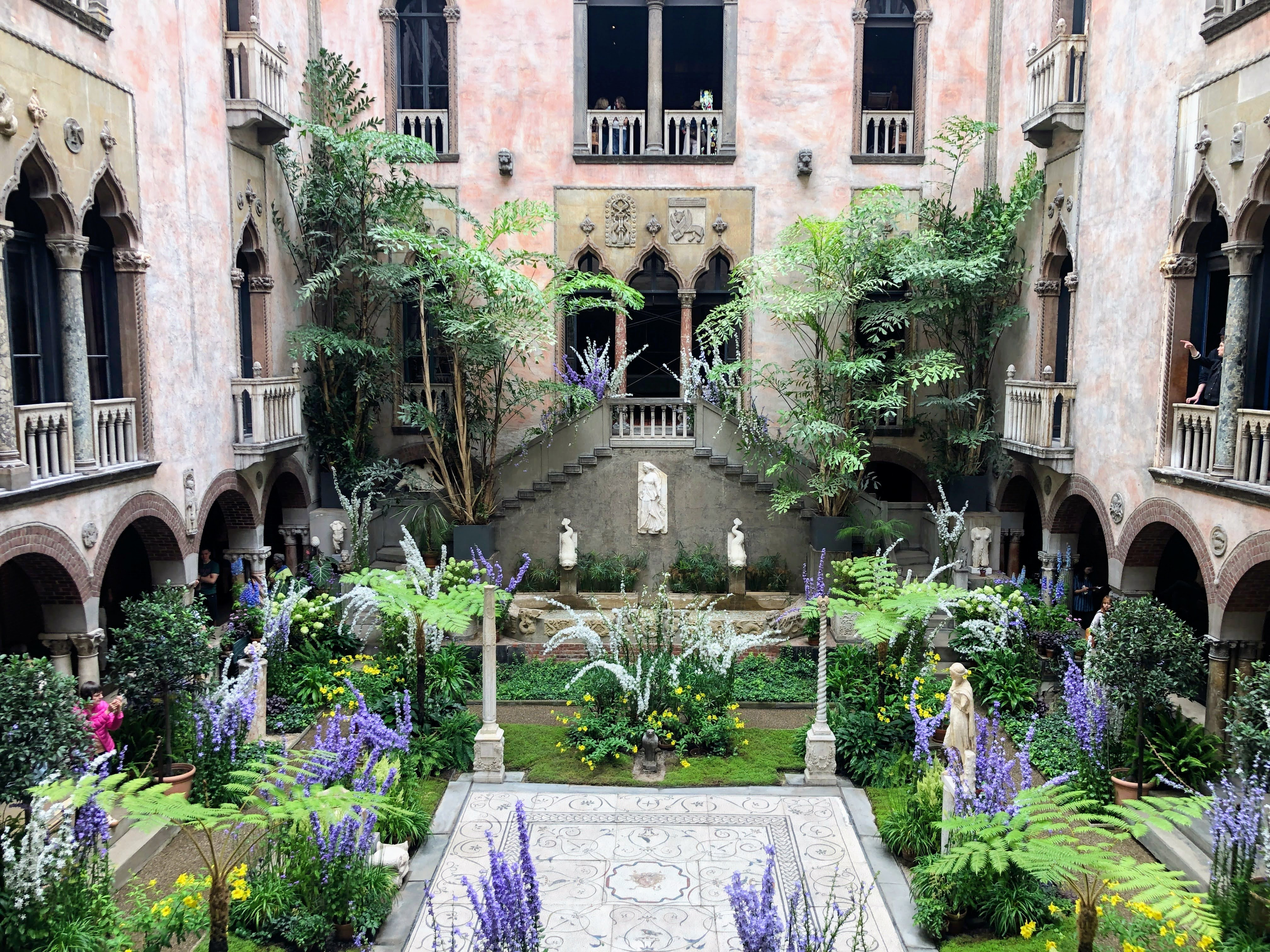
We’re always on the lookout for spaces that feel a little bit magical, and the Isabella Stewart Gardner Museum more than delivered. Modeled after a Venetian palazzo, the museum wraps around a stunning interior courtyard, lush with greenery and filled with light. The art itself is eclectic and deeply personal — think European masterpieces, tapestries, rare books, sculptures — all arranged according to Isabella’s original vision, not a curator’s labels.
There’s also an air of mystery: in 1990, thirteen works were stolen from the museum in one of the world’s most infamous art heists. The empty frames still hang on the walls as placeholders, and the missing pieces add a strange kind of presence. It’s haunting in the best way.
✨Pro Tip: Give yourself at least 2–3 hours here. The layout is unique, and the slower you go, the more you’ll notice. It’s not a place to rush. There are 3 levels and every corner tells a story.
Smart Money-Saving Tips for Your Boston Getaway
Boston isn’t the cheapest city, but with a bit of planning, it’s entirely possible to enjoy a full, rich experience without overspending. Here’s what worked for us:
Leverage your credit card points whenever possible. We paid for our airfare using the points from my Chase Southwest credit card and our room at the Hyatt Place Boston/Seaport Hotel using the points from my Chase Sapphire Preferred credit card. This significantly reduced our out-of-pocket costs right from the start.
(If you want to learn how to leverage credit card points for travel, here’s the book I learned from.)Choose a hotel with small but meaningful perks. Our hotel didn’t include breakfast, but it did offer a free daily bottle of water for each of us, 2 complimentary bowls of delicious New England clam chowder during our stay, and a mini fridge and microwave in our room. Those little conveniences made it much easier to manage food costs.
Skip the rental car. Boston is incredibly walkable, and the “T” (Boston’s subway system) is clean, affordable, and easy to navigate. Our hotel also offered a free airport shuttle, which we rode to and from the airport and to the airport’s T stop, saving us even more on transportation. We paid just $2.40 per ride, with no distance- or time-based pricing like DC’s Metro.
Take rideshares sparingly. Prices fluctuate based on distance and time of day. We only used them twice and relied on the T the rest of the time.
Use CityPASS or Groupon for discounted admission to museums and local experiences.
Share meals, bring snacks, grab groceries when possible, and carry a refillable water bottle. The little savings can add up quickly.
Avoid tourist-trap restaurants. Walking just one or two blocks away can lead you to better food for less money. Dining out at lunch and happy hour instead of dinner also saved us money.
Easy Day Trips from Boston
If you have a little extra time, Boston makes a great home base for exploring more of New England. Here are a few day trips that are easy to do without changing hotels:
Cambridge: Just across the river, home to Harvard University and MIT, plus great museums and cafes. An easy ride on the Red Line.
Salem: Famous for its witch trials and spooky charm, Salem is about 45 minutes by commuter rail or ferry. Don’t miss the historic architecture and quirky museums.
Concord & Lexington: Key sites in the Revolutionary War, with beautiful walking trails and literary history (think Louisa May Alcott, Emerson, and Thoreau).
Rockport & Gloucester: Quaint seaside towns just an hour away by train — great for art galleries, fresh seafood, and ocean views.
Newport, Rhode Island: A bit longer (around 1.5–2 hours by car), but doable if you want to see Gilded Age mansions, coastal cliffs, and charming harbors.
Unfortunately, we weren’t able to take any of these day trips since our trip was short, but I have them on my bucket list for next time (especially Salem).
Final Thoughts
Boston surprised us. We came for the history, but stayed for the beauty, the walkability, and the layered sense of place. It’s a city that honors its past without being stuck in it. Where you can stand on a battlefield, photograph a modern skyline, admire a centuries-old library, and eat fresh cannoli all within a few blocks.
Whether you’re an art enthusiast, architecture buff, amateur historian, or just a curious traveler looking for your next adventure, Boston has something for you.
You don’t need a rental car. You don’t need a huge budget. You just need comfortable shoes, an open mind, and perhaps a backup phone battery for all the photos you’ll be taking.
I do agree with all the ideas you have introduced on your post They are very convincing and will definitely work Still the posts are very short for newbies May just you please prolong them a little from subsequent time Thank you for the post
Thank you for reading the post and taking the time to comment. If there was specific information you were looking for in the post that wasn’t included, please let me know.
Hi, Duncan. I’ve expanded on the information. Hopefully this is more helpful. Please let me know if there is something specific you’re looking for so I can be sure to include it in future posts.