

Small acts, when multiplied by millions
of people, can transform the world.~ Howard Zinn
Over the past few years, I’ve been making small changes in my everyday life—eating a little healthier, cutting back on plastic, and being more mindful about what I use and throw away.
At some point, it hit me…why wasn’t I doing the same when I traveled?
And once I noticed it, I realized it didn’t take much to start changing it.
And the best part? You don’t have to do all of this perfectly. Even making one or two small changes can make a meaningful difference.
If you’ve ever felt the same way, you’re not alone. The good news? It’s easier than you might think to travel more sustainably.
WHAT SUSTAINABLE TRAVEL
LOOKS LIKE TODAY
Sustainable travel has evolved over the past few years. It’s no longer just about reducing plastic or reusing towels—it’s also about being more intentional with how, where, and why we travel.
That can look like:
- Traveling slower and staying longer in one place
- Supporting locally owned businesses
- Avoiding overcrowded destinations during peak times
- Making thoughtful choices before you even book your trip
Don’t worry, you don’t have to do everything on this list. This post will walk you through simple ways to get started.
Small changes really do add up, especially when you travel regularly..
ALTER HOW YOU GET AROUND
Walk, ride a bike or electric scooter instead of driving.
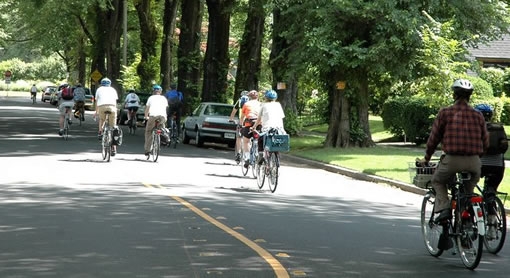
Environmental Impact – The amount of air pollution and fuel consumption is reduced.
Financial Benefits – Walking and bike riding are free activities (if you ride your own bike). If you don’t have your own bike, you can rent one for a small fee from the bike kiosks that are popping up all over the place.
Health Impact – Both walking and bike riding are great ways to get some exercise and Vitamin D while exploring a new place. The time will fly and you’ll hardly notice that you’re exercising. Walking and bike riding are also 2 of my favorite ways to stay fit when traveling.
✨PRO TIP: This is also one of the best ways to stumble upon places you would’ve completely missed otherwise.
Environmental Impact – Public transportation is more environmentally friendly since multiple people are transported at a time, resulting in less gas and oil burned and lower emissions.
Financial Benefits – Public transportation costs a lot less than taking a cab or using a rideshare service. The money you save on transportation can be used for fun activities, meals out, or simply saved for your next adventure. My boyfriend and I took public transportation everywhere we went in Boston and Seattle, and it saved us a huge amount of money.
Bonus: It’s also a great way to experience a destination more like a local.
Environmental Impact – As with other transportation options that carry multiple passengers, carpooling uses less gas and oil and reduces the number of vehicles on the road.
Financial Benefits – Carpooling is the least expensive rideshare option, allowing you to get to your destination and save money at the same time.
✨ Pro Tip: If you DO choose the carpooling option, be sure to allow extra time to get to your destination. This is not the option to choose if you have to be somewhere at a specific time since the addition of other passengers usually adds extra time to your trip.
For tips on how to have the best Uber passenger experience, click here.
Take buses and trains instead of driving.

Environmental Impact – Since buses and trains can transport larger quantities of people, there are fewer vehicles on the road, which lessens traffic. In addition, they use a lot less fuel and release much lower amounts of carbon dioxide, keeping the air cleaner. In many cases, this can significantly reduce your carbon footprint compared to flying.
Financial Benefits – Buses and trains are reliable, cost-effective ways to get around and they offer the added benefit of allowing you to read, work, even sleep while someone else does the driving. (Local buses and subways are also good, affordable local transportation options.)
I personally use Wanderu to compare routes and pricing. It’s been a great way to find affordable options without a ton of searching.
Drive instead of flying.
Environmental Impact – For shorter distances, especially when traveling with multiple people, driving can sometimes be a more environmentally friendly option than flying. If you need to rent a car, many car rental agencies now offer hybrid options.
Financial Benefits – Depending on factors such as distance, time of year, cost of gas, and the fuel economy of your vehicle, driving may be less expensive than flying.
To determine the environmental impact of flying or driving as well as the costs associated with both, check out the Fly or Drive calculator.
Choose a nonstop flight vs. a flight with 1+ stops.
Environmental Impact – Nonstop flights burn less fuel since they don’t have to take off and land multiple times. Fewer flights also reduce the amount of air pollution.
Financial Benefits – Although direct flights typically cost more than flights with 1+ stops,you may end up spending more during long layovers on food, shopping, and other extras, so it often balances out.
Nonstop flights also save you time – a commodity you cannot get back, making it priceless.
ALTER HOW YOU EAT & DRINK
Recycle your paper, plastic, and glass items.
Environmental Impact – Recycling reduces the amount of waste in landfills and allows manufacturers to give the recycled materials new life. Reducing your garbage by 10% reduces your carbon footprint by 1,200 pounds a year.2
Carry a Reusable Water Bottle Instead
of Buying a Single-Use Water Bottle
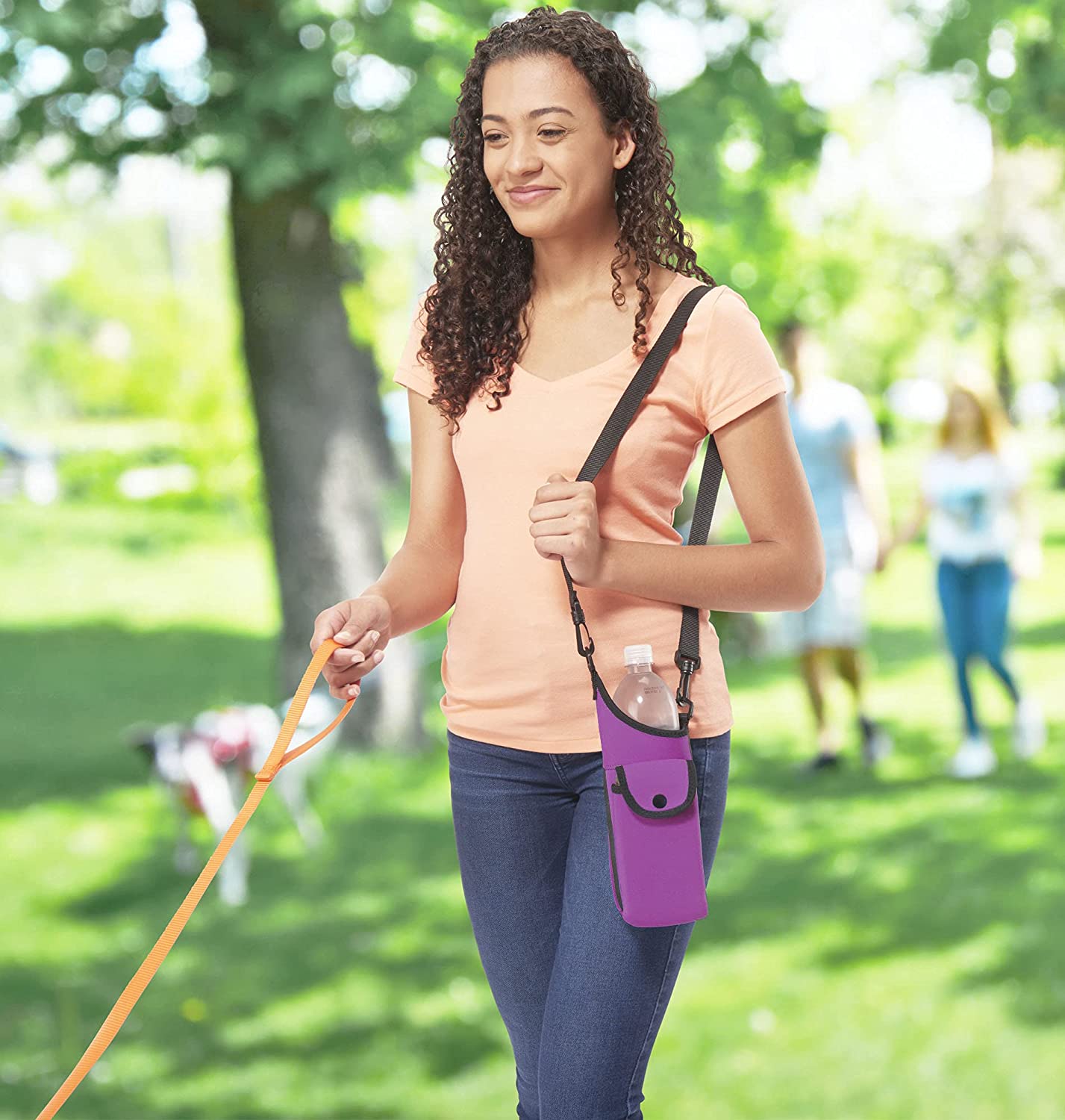
Environmental Impact – Carrying a reusable water bottle significantly reduces the quantity of plastic in landfills and oceans.
Financial Benefits – If you’re conscientious about staying hydrated, the cost of bottled water can add up quickly. And if you purchase it at an airport, you’ll have to pay at least $5+ for a 20 oz. bottle (yikes!). By investing in a reusable water bottle, you’ll save money by being able to fill up at water fountains and other places where drinkable water is available.
This is one of the easiest swaps you can make. I take one with me everywhere.
Depending on the type of trip I’m taking, I rotate between a few different options:
-
- My go-to for the past several years has been this reusable 32-oz water bottle. It’s the one I reach for on most trips because I’m not constantly refilling it. (When I go hiking or sightseeing and want to be hands-free, I put it in this handy neoprene sling.)
-
- This 32 oz. stainless steel insulated water bottle is my new favorite, especially for longer travel days. It keeps drinks cold or hot for hours, and the hidden compartment is surprisingly useful for things like meds or emergency cash.
-
- My collapsible BPA-free water bottle is my go-to when space is tight—like when I’m traveling with just a carry-on. It packs down super small but still gives me a full-size option when I need it.
-
- And if I’m heading somewhere outdoors or I’m unsure about water quality, I bring one with a built-in water filter. It gives me peace of mind without relying on bottled water.
Bring Reusable Utensils Instead
of Single-Use Plastic Utensils
Environmental Impact – Bringing your own utensils helps reduce single-use plastic waste.
I’ll be honest. This wasn’t something I thought I needed at first. But once I started carrying a small travel utensil set, I ended up using it way more than I expected.
A compact travel utensil set like the one I have is lightweight, easy to pack, and comes in handy when you least expect it. It’s one of those small things that makes a bigger difference over time.
If you tend to grab quick meals while traveling, this is a super easy swap to make.
[See the TSA’s guidelines regarding utensils]
Carry Reusable Bags Instead
of Disposable Plastic Bags.
Environmental Impact – Plastic bags often end up in landfills unless recycled. Reusable bags are sturdier and more sustainable.
This is one of those small changes that quickly becomes second nature—and something you’ll use more than you think.
I always keep a few folded in my bag and several in my car for grocery runs. They take up almost no space and have come in handy more times than I can count while traveling, whether it’s carrying snacks, souvenirs, or just consolidating things in my bag.
If you travel with just a carry-on, these are especially helpful for keeping things organized without adding bulk.
Recommended Reusable Bags (based on how I use them):
- Everyday Shopping & Travel: Reusable Shopping Bags,
- Snacks & Food Storage: Reusable Sandwich & Snack Bag Set,
- Alternative to Disposable Bags: Recyclable & Sealable Paper Sandwich Bags
ALTER WHERE YOU STAY
Even small decisions about where you stay can have a ripple effect, especially when you’re supporting businesses that are trying to do things the right way.
Look for properties that support local communities, reduce waste, and use energy-efficient practices. Even small choices here can make a difference.

I had an amazing time staying at the Villa Blanca Cloud Forest Hotel and Retreat in Costa Rica. The property was absolutely stunning, the staff was incredibly friendly, and the food was delicious.
But what really stuck with me wasn’t just how beautiful it was, it was how intentional everything felt.
They weren’t just talking about sustainability, they were actually doing it. They recycle their waste and even have a cow on-site whose milk they use to make fresh cheese.
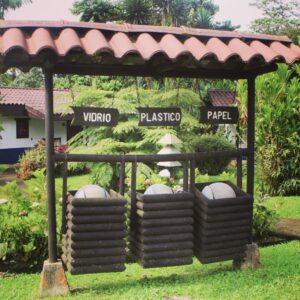
It was one of the first times I saw sustainable practices woven into the entire experience, not as a sacrifice, but as something that actually made the stay feel more meaningful.
And it made me realize that choosing where you stay can be one of the easiest ways to support more sustainable travel without giving up comfort or experience.
Now, I find myself paying more attention to the types of places I book and looking for properties that are making an effort, even in small ways
ALTER YOUR BEHAVIOR AT YOUR HOTEL

You leave the room and come back to a freshly made bed and clean towels. Its almost as if a genie came into your room, blinked, and poof—your room was fresh and clean. But all of that convenience comes with a cost: water, energy, and resources.
Many hotels have begun doing their part to become more environmentally friendly and encourage their guests to skip having housekeeping freshen their rooms by providing information about how many gallons of water it takes to wash the sheets and towels each day.
How can you help?
Use your towels more than once.
Instead of using a towel and dropping it carelessly on the hotel bathroom floor, hang it up to dry so you can use it again. Most of us use our towels more than once before washing them when we’re at home, right? So why should it be any different when you’re away?
♻️ Environmental Impact – When guests use their towels more than once, fewer loads of laundry need to be done by the hotel’s housekeeping staff or laundry service. Fewer loads mean less water, detergent, and electricity used.
Don’t have housekeeping
change your sheets every day.
Pending some “accident” or extra-sweaty weather, there’s no need for housekeeping to change your sheets daily. Most of us wash our sheets weekly, not daily when we’re at home. Being away shouldn’t alter your behavior.
♻️ Environmental Impact – As with towels, the fewer sheets that need to be washed, the fewer loads of laundry that need to be done by the hotel’s housekeeping staff or laundry service. Fewer loads mean less water, detergent, and electricity need to be consumed.
Bring your own toiletries instead of
using the ones the hotel provides.
Although I have been guilty of using the cute Barbie-size shampoo, conditioner, and other toiletries I’ve found in my hotel room (and hoarding the ones that I didn’t use), I started bringing my own in refillable silicone toiletry bottles.
♻️ Environmental Impact – By discontinuing the use of toiletries in single-use plastic bottles, you will be helping reduce the millions of tons of plastic that end up in landfills. The benefit to you is that you are able to continue to use the products that you love.
If you’ve made it this far, you’re already thinking differently about how you travel—and that’s what matters most.
You don’t have to do everything at once. Start with one or two of these changes and build from there.
And if you want a simple way to plan more intentional trips, including making smarter, more sustainable choices before you even book, my Beyond the Bucket List Workbook helps you organize everything in one place.
Which tip(s) are you going to begin using?
Share in the comments below ⇓
1 – Carbon footprint – the amount of carbon dioxide and other carbon compounds emitted due to the consumption of fossil fuels by a particular person, group, etc.
2 – Source: Earth Day Tips