
The idea of traveling alone can sound exciting…until you actually start thinking about doing it.
Where will you stay? Is it safe? Will eating alone feel awkward? How do you take pictures of yourself? And what if you get lonely?
Those are some of the things that can keep people from taking their first solo trip. But traveling alone doesn’t have to mean booking a flight across the country and spending a week completely on your own.
You can start much smaller.
I talked with photographer and experienced solo traveler Abby Shepard about what she’s learned from traveling on her own, from camping and staying safe to dining alone and taking her own travel photos.
And one of my favorite pieces of advice from our conversation was also one of the simplest: start small and work your way up.
Why Travel Alone?
One of the biggest benefits of solo travel is that you’re completely in charge of the trip.
There’s no negotiating over where to eat, what time to get up, which attractions to visit, or whether you’d rather spend another hour exploring a neighborhood instead of moving on to the next thing.
Abby says traveling alone forces her to think about what she wants, what makes her happy, and what will make the trip fulfilling for her.
It can also build confidence that carries over into other areas of your life. When you’ve figured out transportation, accommodations, meals, directions, and unexpected problems on your own, you have pretty good evidence that you’re capable of handling things.
And traveling solo doesn’t mean you have to do everything alone forever. Sometimes it’s simply nice to know that you can.
Driving vs. Flying When You’re Traveling Alone
Abby uses a simple rule of thumb when deciding whether to drive or fly. If a destination is within roughly a six-hour drive, she’ll usually drive. For longer distances, she’s more likely to fly.
I like the idea of having your own personal cutoff.
Your number doesn’t have to be six hours. Maybe you’re perfectly happy driving eight hours. Maybe four is your limit.
Having a guideline makes it easier to narrow down possible destinations and can help you find places close to home that you may have overlooked.
✨ATB TIP: If you’re nervous about taking your first solo trip, driving somewhere relatively close to home can make the whole thing feel less intimidating. You have your own car, you can bring what you need, and if you decide solo travel isn’t your thing, home isn’t that far away.
Where to Stay When You’re Camping Solo
Abby camps on some of her solo trips, but she doesn’t automatically head for a National Park.
Reservations at popular National Park campgrounds can be difficult to get, especially during peak seasons. State parks and private campgrounds can be good alternatives.
✨ATB TIP: If you’re planning to camp in or visit a National Park, check out my National Park planning tips, including advice straight from a National Park Service representative.
Private campgrounds can also offer amenities that matter if you’re working while traveling, such as reliable Wi-Fi.
And depending on where you’re traveling, dispersed camping may not be as readily available. Abby pointed out that there’s far less BLM land and free camping in the eastern U.S. than travelers may encounter out West.
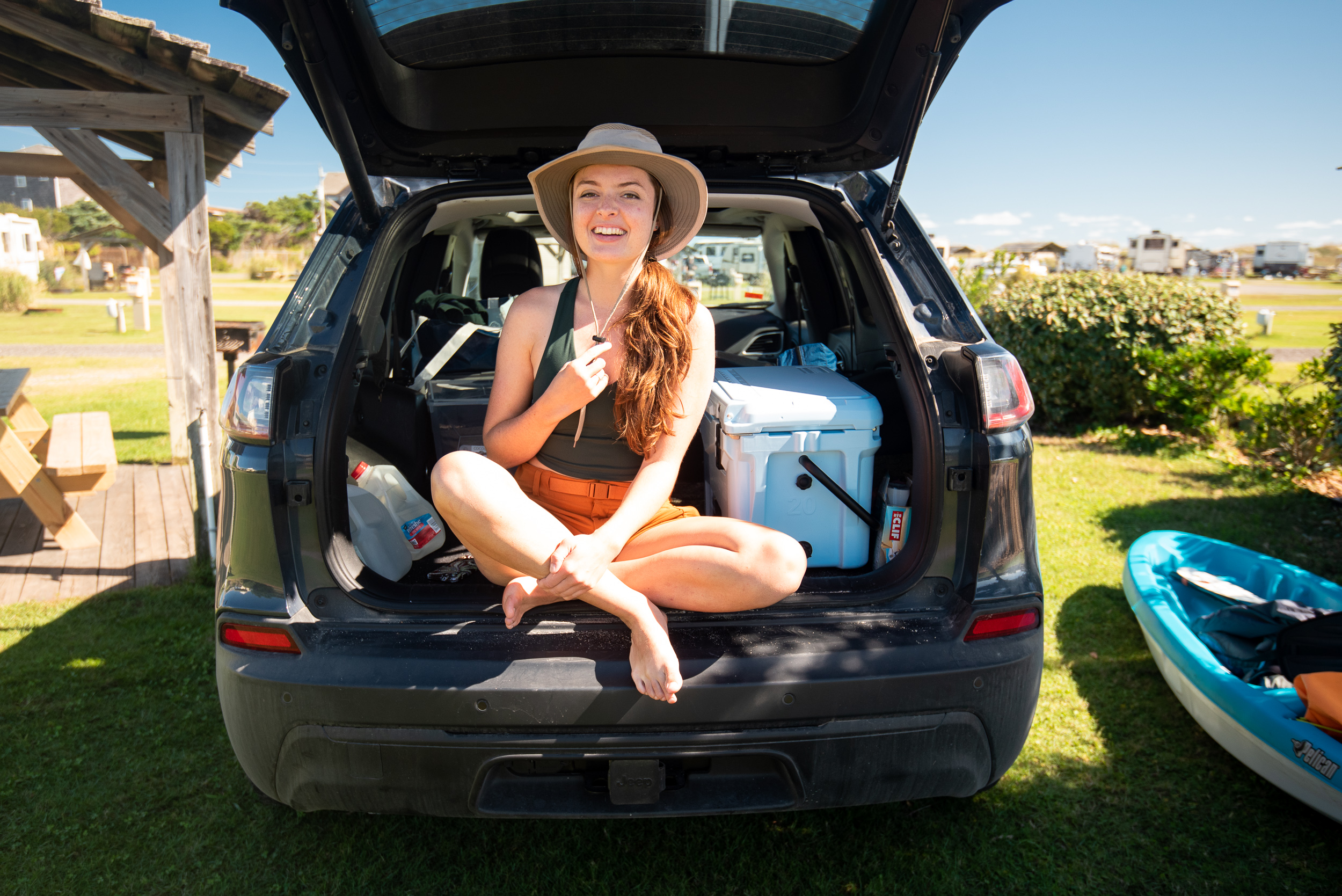
Before choosing a campground, check the current facilities, reservation requirements and rules directly with the campground or park.
How to Stay Safer When Traveling Alone
This is understandably one of the biggest concerns people have about solo travel, particularly women.
Some of Abby’s most useful safety practices don’t require buying anything:
- Download offline maps before you leave. Abby downloads road maps through Google Maps and trail maps so she can navigate even if she loses cell service.
- Tell someone where you’re going. Give a trusted person your general itinerary and let them know where you expect to be.
- Don’t advertise your location in real time. Abby waits until after she’s left a campground or destination before posting about it on social media.
- Plan for losing cell service. Don’t assume you’ll always be able to pull up directions when you need them.
Abby also talked in our interview about the personal safety equipment she chooses to carry. What you can legally carry varies by destination, so check local laws before traveling with any self-defense device.
Is Eating Alone Really That Awkward?
It can be.
Especially the first few times.
But Abby’s advice is essentially: do it anyway. It gets easier.
Sitting at the bar can make dining alone feel more natural, and it’s often easier to get a seat without waiting for a table. If a sit-down restaurant still feels uncomfortable, takeout and fast-casual restaurants are easy alternatives.
I’d add one more ATB thought here: don’t let fear of eating alone keep you from eating somewhere you really want to try.
You may feel conspicuous sitting at a table by yourself, but chances are the other diners are paying far less attention to you than you think.
And you might discover that you actually enjoy it.
How to Take Travel Photos When You’re Alone
This is one of those practical problems you don’t necessarily think about until you’re standing somewhere beautiful and realize there’s nobody there to take your picture.
Fortunately, you have options.
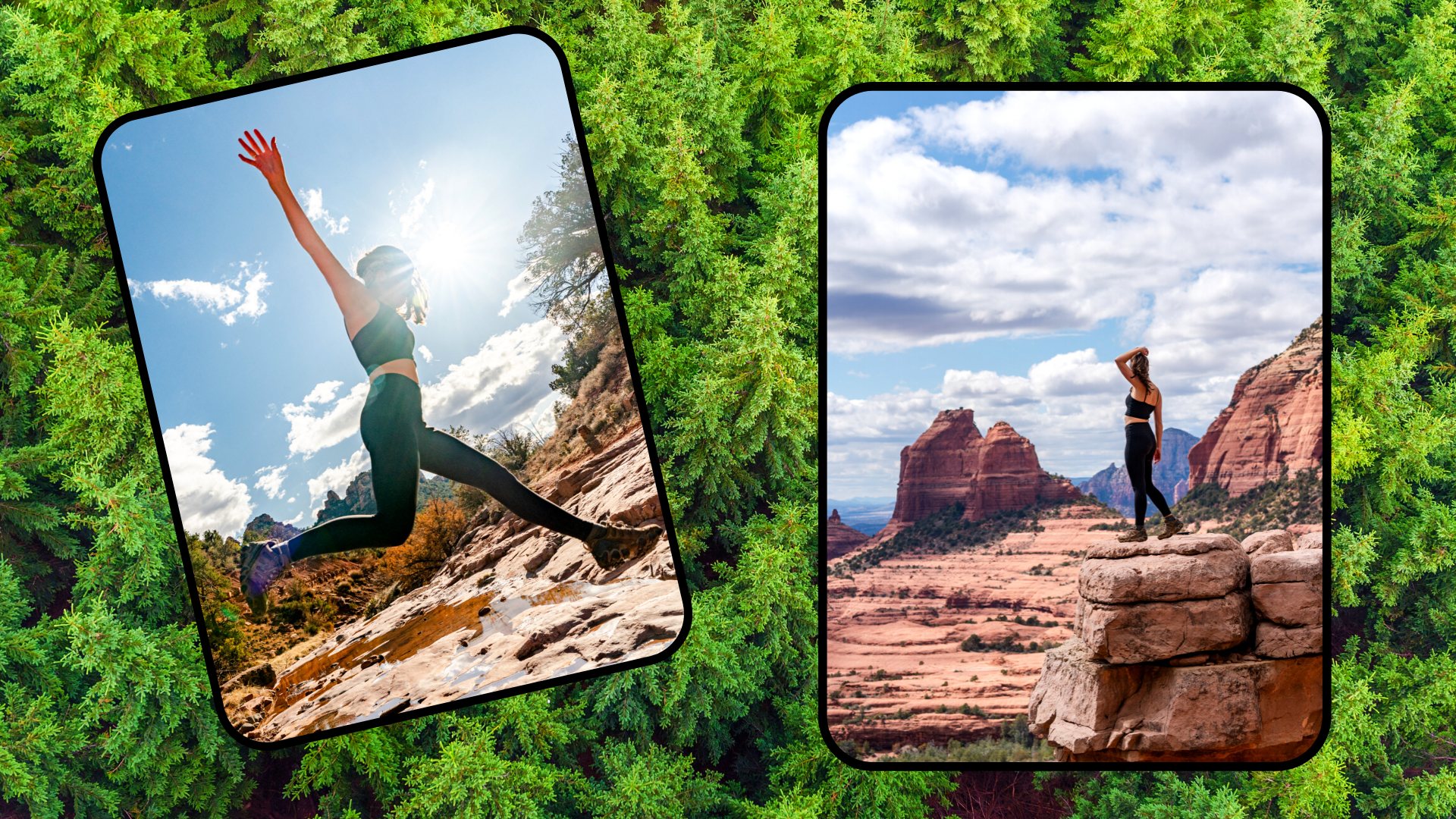
Abby uses apps that allow her to control her camera shutter remotely from her phone. A lightweight phone tripod and wireless remote can accomplish the same thing for phone photography.
But you don’t necessarily need a tripod.
Abby also uses whatever is around her: a backpack, rock, ledge, or another stable surface.
I think a lot of people are so used to that now. You know everyone’s got a phone and everybody’s posting themselves on the social media sites so it’s probably not as uncommon as some people might think. Yeah.
Another thing I just thought of: I don’t like carrying my tripod usually. Well, sometimes I do, but I don’t like carrying it because it’s really heavy, but recently I’ve just started using whatever’s in the landscape to put my camera on or my phone like my backpack, rocks, a ledge…just use whatever’s around you if you don’t want to carry a tripod or you don’t have one.
Her other tip is one I particularly like: take lots of photos and keep moving.
Instead of trying to nail one perfect pose, walk, turn, look in different directions and take multiple shots. You can sort through them afterward and keep the handful you actually like.
And yes, you might feel a little ridiculous the first few times you photograph yourself in public.
Do it anyway.
✨ATB Tip: If you’d like to improve the photos you take on your travels, professional travel photographer Ralph Velasco also shared his tips for taking better travel photos with me.
Solo Travel vs. Traveling With Someone
Traveling alone and traveling with someone else both have advantages.
When you travel with another person, you have someone to eat with, hike with, talk to and share experiences with. On a road trip, you may also have someone to split the driving and help with navigation and logistics.
But there’s another side to it.
You’re together. A lot.
Traveling with someone requires compromise and communication. You aren’t always going to want to eat at the same restaurant, see the same attraction, get up at the same time, or spend money on the same things.
That’s one of the freedoms of traveling solo: the only person you have to please is yourself.
Neither way of traveling is inherently better. They’re simply different experiences.
And you don’t have to choose one or the other. You can enjoy traveling with a partner, family or friends and still occasionally take a trip by yourself.
How to Start Traveling Solo
If the thought of taking a solo trip makes you nervous, Abby doesn’t recommend jumping immediately into a weeklong adventure.
Start small.
Try something like:
- Take a hike by yourself somewhere familiar.
- Spend a day exploring a nearby town on your own.
- Take yourself out for lunch or dinner.
- Plan a day trip a little farther from home.
- Spend one night away by yourself.
- Gradually work your way up to a longer trip.
Have a rough plan, too.
You don’t need to schedule every minute, but knowing where you’re staying and having a few things you want to do can provide some structure, especially when you’re getting used to traveling alone.
Most importantly, give yourself permission not to be perfect at it.
Maybe you’ll get lonely. Maybe you’ll choose a lousy restaurant. Maybe you’ll get lost. Maybe you’ll discover that you don’t particularly enjoy solo travel.
That’s okay.
As Abby pointed out, something inconvenient or disappointing will eventually happen on any kind of trip. You learn from it, make adjustments, and you’re better prepared the next time.
You Don’t Have to Wait for Someone Else to Travel
I think that’s ultimately one of the most valuable lessons of solo travel.
There are plenty of wonderful reasons to travel with someone else. But not having someone who’s available, interested in the same destination, or ready to go at the same time doesn’t necessarily have to keep you home.
Start with something small.
See how it feels.
You may discover that you’re more comfortable traveling by yourself than you ever expected.
Have you ever traveled solo? If not, what’s the biggest thing holding you back? Tell me in the comments.